
Political circles in Tamil Nadu are rife with speculation about a potential alliance between rivals DMK and AIADMK to prevent the TVK from forming a government. This comes after the Congress party joined forces with TVK, further complicating the political landscape.

Tamil Nadu Chief Minister C Joseph Vijay met with his predecessor, DMK President MK Stalin, at his residence in Alwarpet, Chennai, ahead of a crucial floor test for the government. The meeting, described as a courtesy call, occurred after Vijay's criticism of the previous DMK regime's debt burden.

Tamil Nadu Governor Rajendra Vishwanath Arlekar informed TVK chief Vijay that his party lacks the necessary support to form the government. TVK is intensifying efforts to gain support from Left parties, VCK, and IUML. The Governor's decision has sparked protests and political debate in the state.

Actor-politician Vijay's newly formed party, Tamilaga Vettri Kazhagam (TVK), has made a surprising and strong showing in the Tamil Nadu Assembly elections, leading in nearly 100 constituencies and leaving established Dravidian parties like DMK and AIADMK trailing.

Actor Vijay has been sworn in as the Chief Minister of Tamil Nadu, marking a significant shift in the state's political landscape. His party, Tamilaga Vettri Kazhagam (TVK), secured a notable victory in its debut election, ending the dominance of DMK and AIADMK.

The TVK has ended the nearly six-decade dominance of DMK and AIADMK in the Tamil Nadu Assembly elections, securing 108 out of 234 constituencies in its debut, but falls short of the 118 seats needed for an absolute majority, prompting discussions on coalition options and the governor's role.

Tamilaga Vettri Kazhagam chief Vijay, buoyed by the support from the Left parties, on Friday called on Governor Rajendra Vishwanath Arlekar at the Lok Bhavan in Chennai in connection with securing an invite from him to form the government.

What lessons opposition parties need to learn post defeat of Mamata Banerjee in West Bengal elections? The election saw spectacular victor of BJP which rose from 3 seats in 2016 to 206 seats in 2026 assembly elections.

'If the Opposition associates itself too much with the minorities, then it becomes easy for the BJP to get Hindu consolidation votes.'

Vijay was appointed CM after he presented letters of support from the VCK and the IUML who have two MLAs each.

Actor Vijay, president of Tamilaga Vettri Kazhagam (TVK), was sworn in as the Chief Minister of Tamil Nadu. The ceremony included a selfie with Rahul Gandhi and a 360-degree video of the cheering crowd. Vijay's party achieved a historic debut, ending the duopoly of DMK and AIADMK.

'Remember Vijay had never spoke of himself as a Christian when he was a film star.' 'The BJP strategy is they want the Christian minority constituency to move away from the DMK.' 'That is what the BJP wants so that it will be very easy to mobilise Hindu votes.' 'This strategy is to weaken the Dravidian ideology and bring in religion based politics into Tamil Nadu.'

Unlike films that end with the underdog becoming winner and being sworn in at a public ceremony, Vijay's trial by fire is only about to begin, predicts Saisuresh Sivaswamy.

Actor Vijay is set to be sworn in as the Chief Minister of Tamil Nadu after his party, Tamilaga Vettri Kazhagam (TVK), secured a majority in the Assembly with coalition support. The swearing-in ceremony will take place at Jawaharlal Nehru Stadium in Chennai.

C Joseph Vijay was sworn in as the Tamil Nadu Chief Minister, marking the first non-DMK, non-AIADMK government in the state in 60 years. The ceremony was attended by Rahul Gandhi, and Vijay promised transparent governance and asserted his sole authority. He signed files to implement key promises, including free power for domestic consumers.

'The AIADMK and DMK have 75% of the total votes. 25% of the voters do not support the two majors,' says DMK spokesperson Saravanan Annadurai.

A Constitution Amendment Bill aimed at implementing 33 per cent reservation for women in legislatures and increasing Lok Sabha seats was defeated in Parliament, marking a setback for the government's efforts to empower women in politics.

Small parties have the capacity to play both ends against the middle. Puducherry could be heading that way, points out Aditi Phadnis.
The Deepa Thoon controversy, if not allowed to die a natural death, could take the election focus away from the anti-incumbency impacting the DMK and into the secular space. Stalin would love to have it that way, all over again, after the three past elections, points out N Sathiya Moorthy.
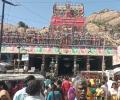
Several opposition MPs have submitted a notice to the Lok Sabha Speaker to move a motion for the removal of Madras High Court Judge G R Swaminathan over his order regarding a temple lamp.

'The jail staff told me Kasab was served only jail food and not biryani.' 'They told me that Kasab was beaten regularly after court proceedings.' 'And they filled Kasab's bottle with urine so that whenever he felt thirsty he used to drink urine.'

After big win in Bihar, the BJP is likely to push harder in Tamil Nadu, where the DMK government and the uneasy BJP-AIADMK alliance are preparing for a tense election filled with seat-sharing fights, changing alliances, and the unpredictable entry of Vijay's TVK party, predicts N Sathiya Moorthy.

The BJP's MoSha leadership are past masters in encouraging defections from their allies if it helped their party capture the chief minister's chair. In Bihar, they are not sure if JD-U MPs and MLAs would be willing to cross over to the BJP if the Nitish leadership came on top -- and the NDA crossed the halfway mark together, observes N Sathiya Moorthy.

Despite an earlier direction by the Bench, the lamp was not lit on an ancient stone pillar near a Dargah on the Thirupparankudram hill here on Karthigai Deepam this evening, triggering protests by the Hindu Munnani activists and a section of devotees.
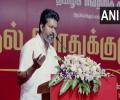
Actor Vijay, founder of the Tamizhaga Vettri Kazhagam (TVK) party, has declared that his party will challenge the ruling DMK in the 2026 Tamil Nadu Assembly elections. In a general council meeting, Vijay criticized the DMK's dynasty politics, their handling of law and order, and women's safety. He also targeted the BJP-led central government over issues like the Waqf Bill, delimitation, and the three-language policy. Vijay promised his party's support to working classes, government employees, and vowed to oppose projects harmful to natural resources and agriculture. He assured 100% safety for women and strict law and order if TVK forms the government. The party passed resolutions opposing the Waqf Bill, delimitation, and the three-language policy, and also voiced support for the two-language policy, finding a permanent solution for fishermen's issues, and opposing the Parandur airport project.
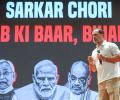
'Rahul Gandhi's problem is that he doesn't think big.' 'He looks more like an activist, while politics is like a game of chess. You attack and then defend and have a game-plan.'

Vijay, despite the loud message from his delayed arrival at the road-show/stampede venue, and more so his continued inaccessibility for fans-turned-cadres after graduating from a super-star to a political party leader with electoral ambitions, refuses to change. Or, so it seems, observes N Sathiya Moorthy.
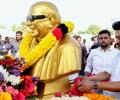
This article traces the history of the DMK's fight for state autonomy, beginning with C.N. Annadurai's advocacy in the 1960s and culminating in M. Karunanidhi's resolution in the Tamil Nadu Assembly in 1974. The article highlights the key figures involved, the arguments presented, and the impact of the Rajamannar Committee Report.

This is important because he is to be seen as a sure winner before criss-crossing the state to campaign for candidates of the party or an alliance, highlights N Sathiya Moorthy.
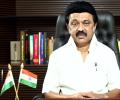
Tamil Nadu Chief Minister and DMK president M K Stalin announced that his party will file a case in the Supreme Court against the Waqf Bill passed in the Lok Sabha. The opposition AIADMK expressed solidarity with the DMK's stance, while the BJP members staged a walkout from the Assembly in protest. The CM argued that the amendment was passed at the behest of a few allies despite opposition from majority parties and that it is an attack on the Constitution and religious harmony. The DMK claims the bill threatens the autonomy of the Waqf Board and the Muslim minority population.
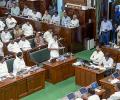
The Tamil Nadu Assembly passed a resolution on Thursday condemning the Centre's proposed Waqf Amendment Bill 2024, calling for its recall. Chief Minister M K Stalin argued that the amendment interferes with religious affairs and would negatively impact the Muslim minority. The resolution was unanimously passed by the Assembly, with support from all parties, including the opposition AIADMK and PMK. The BJP, however, walked out in protest, accusing the ruling DMK of engaging in divisive politics. The bill aims to streamline the Waqf Board's work and ensure efficient management of Waqf properties but has been criticized for potentially encroaching on religious freedom and autonomy. The Tamil Nadu government claims that the amendment would lead to government control over the Waqf Board and its properties, impacting its autonomy and potentially allowing for government acquisition of Muslim-owned lands.
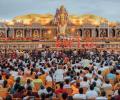
While acknowledging that they needed strong allies for a chance in the assembly polls, AIADMK cadres seemingly prefer actor-politician Vijay's Tamilaga Vettri Kazhagam to the BJP, owing to the latter's 'communal agenda' and consequent hardline Hindutva image, explains N Sathiya Moorthy.

In a first, BJP crossed the 10 per cent vote share-mark in Tamil Nadu and has so far registered a share of 10.21 per cent, though it could not emerge in lead positions anywhere.
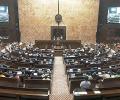
The Waqf (Amendment) Bill, 2025 was passed in the Lok Sabha early Thursday, with 288 members supporting it and 232 against it.

A three-judge Supreme Court bench will hear petitions challenging the constitutional validity of the Waqf (Amendment) Act, 2025, on April 16. The petitions, including those by politicians and the All India Muslim Personal Law Board (AIMPLB) and Jamiat Ulama-i-Hind, were filed in the top court challenging the validity of the newly-enacted law. The Centre has filed a caveat in the apex court, seeking a hearing before any order is passed.
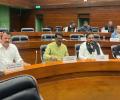
The parliamentary committee scrutinising the Waqf bill is set to propose that existing 'Waqf by user' properties will remain so if not in dispute or are government facilities but they must be registered before the new law takes effect, providing little relief to Waqf bodies in their unverified title claims.

Since the IPKF's withdrawal from Sri Lanka in March 1990, the LTTE's once-powerful influence in Tamil Nadu has faded.

The Supreme Court on Friday refused to entertain a fresh plea challenging constitutional validity of the Waqf (Amendment) Act, 2025.
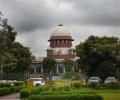
The Supreme Court of India will likely hear a batch of petitions challenging the constitutional validity of the Waqf (Amendment) Act, 2025 on April 15. The Act, which came into force on April 8, has been met with widespread criticism from various stakeholders, including politicians, the All India Muslim Personal Law Board (AIMPLB), and Jamiat Ulama-i-Hind. They argue that the law is discriminatory and violates the fundamental rights guaranteed under Articles 25 and 26 of the Constitution. The petitions allege that the amendments give the government more control over the administration of Waqf, effectively sidelining the Muslim minority from managing their own religious endowments.
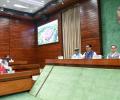
At the customary meeting ahead of the session beginning Monday, the opposition raised various issues, including voter roll revision in Bihar, the Pahalgam terror attack and Trump's 'ceasefire' claims.
 © 2026 Rediff.com - Advertise with us - Disclaimer - Privacy Policy - Sitemap - Feedback - About us - Terms of use - Grievances